I really like Robert Ryman's paintings. There is a deceptively simple graphic quality to his work - he was creating incredibly contemporary looking work in the 1950s -60s; and his use of white is inspired.
Robert Ryman was born in 1930 in Nashville. In 1948 he enrolled at Tennessee Polytechnic Institute but transferred the next year to George Peabody College for Teachers in Nashville, where he studied music. In 1950 Ryman enlisted in the United States army reserve corps and was assigned to an army reserve band during the Korean War. In 1952 he moved to New York and studied with jazz pianist Lennie Tristano. Taking on odd jobs to support himself, Ryman took a position as a guard at the Museum of Modern Art, New York, in June 1953. During that year, the artist made his first paintings.
In 1955 Ryman began what he considers his earliest professional work, a largely monochrome painting known as Orange Painting.
His work was first exhibited in a staff show at the Museum of Modern Art, New York, in 1958, and later that year he was included in a group show at the Brata Gallery, New York. In the late 1950s Ryman became friends with artists Dan Flavin and Michael Venezia, both of whom were also working at the Museum of Modern Art.
In 1961 he also began to paint on a full-time basis. During the early 1960s, Ryman spent a great deal of time with other artists whose studios were on the Bowery, including Tom Doyle, Eva Hesse, Sol LeWitt, and Sylvia and Robert Mangold. At this time, Ryman began executing his first paintings on metal (vinyl polymer on aluminium), a support he would use many times again. In 1966 Ryman�s work was included in Systemic Painting at the Solomon R. Guggenheim Museum, New York, along with twenty-eight other artists, including Ellsworth Kelly, Jackson Pollock, and Frank Stella. The artist�s first solo exhibition took place at the Paul Bianchini Gallery, New York, in 1967. Two years later, Ryman was included in When Attitudes Become Form, a seminal exhibition of works by Minimalist and Conceptual artists organized by the Kunsthalle Bern. Throughout his career, Ryman has isolated the most basic components of painting and experimented with their variations.
In 1972 the Solomon R. Guggenheim Museum exhibited thirty-eight of Ryman�s works from 1965 to 1972, in the artist�s first solo exhibition in a New York museum. That summer, Ryman was included in Documenta 5 in Kassel. In 1973 the artist was awarded a fellowship from the John Simon Guggenheim Memorial Foundation, and the next year he had a retrospective exhibition at the Stedelijk Museum, Amsterdam. Additional retrospective exhibitions were organized by the Whitechapel Art Gallery in London in 1977 and by InK, Halle f�r Internationale Neue Kunst, Zurich, in 1980, the latter of which travelled throughout Europe. A permanent exhibition of Ryman�s work was installed at the Hallen f�r Neue Kunst in Schaffhausen in 1983. In 1991 his works from 1958 to 1981 were exhibited at Espace d�Art Contemporain, Paris. In 1993 and 1994 an exhibition of Ryman�s work travelled to the Tate Gallery, London; the Museo Nacional Centro de Arte Reina Sof�a, Madrid; the Museum of Modern Art, New York; the San Francisco Museum of Modern Art; and the Walker Art Center, Minneapolis. In 1994 Ryman was elected a member of the American Academy of Arts and Letters in New York, and assumed the role of the organization�s Vice President in 2003. He lives in New York.
Robert Ryman was born in 1930 in Nashville. In 1948 he enrolled at Tennessee Polytechnic Institute but transferred the next year to George Peabody College for Teachers in Nashville, where he studied music. In 1950 Ryman enlisted in the United States army reserve corps and was assigned to an army reserve band during the Korean War. In 1952 he moved to New York and studied with jazz pianist Lennie Tristano. Taking on odd jobs to support himself, Ryman took a position as a guard at the Museum of Modern Art, New York, in June 1953. During that year, the artist made his first paintings.
In 1955 Ryman began what he considers his earliest professional work, a largely monochrome painting known as Orange Painting.
 |
| 1955-59 Untitled (Orange Painting) |
His work was first exhibited in a staff show at the Museum of Modern Art, New York, in 1958, and later that year he was included in a group show at the Brata Gallery, New York. In the late 1950s Ryman became friends with artists Dan Flavin and Michael Venezia, both of whom were also working at the Museum of Modern Art.
In 1961 he also began to paint on a full-time basis. During the early 1960s, Ryman spent a great deal of time with other artists whose studios were on the Bowery, including Tom Doyle, Eva Hesse, Sol LeWitt, and Sylvia and Robert Mangold. At this time, Ryman began executing his first paintings on metal (vinyl polymer on aluminium), a support he would use many times again. In 1966 Ryman�s work was included in Systemic Painting at the Solomon R. Guggenheim Museum, New York, along with twenty-eight other artists, including Ellsworth Kelly, Jackson Pollock, and Frank Stella. The artist�s first solo exhibition took place at the Paul Bianchini Gallery, New York, in 1967. Two years later, Ryman was included in When Attitudes Become Form, a seminal exhibition of works by Minimalist and Conceptual artists organized by the Kunsthalle Bern. Throughout his career, Ryman has isolated the most basic components of painting and experimented with their variations.
In 1972 the Solomon R. Guggenheim Museum exhibited thirty-eight of Ryman�s works from 1965 to 1972, in the artist�s first solo exhibition in a New York museum. That summer, Ryman was included in Documenta 5 in Kassel. In 1973 the artist was awarded a fellowship from the John Simon Guggenheim Memorial Foundation, and the next year he had a retrospective exhibition at the Stedelijk Museum, Amsterdam. Additional retrospective exhibitions were organized by the Whitechapel Art Gallery in London in 1977 and by InK, Halle f�r Internationale Neue Kunst, Zurich, in 1980, the latter of which travelled throughout Europe. A permanent exhibition of Ryman�s work was installed at the Hallen f�r Neue Kunst in Schaffhausen in 1983. In 1991 his works from 1958 to 1981 were exhibited at Espace d�Art Contemporain, Paris. In 1993 and 1994 an exhibition of Ryman�s work travelled to the Tate Gallery, London; the Museo Nacional Centro de Arte Reina Sof�a, Madrid; the Museum of Modern Art, New York; the San Francisco Museum of Modern Art; and the Walker Art Center, Minneapolis. In 1994 Ryman was elected a member of the American Academy of Arts and Letters in New York, and assumed the role of the organization�s Vice President in 2003. He lives in New York.
 |
| 1958 To Gertrude Mellon |
 |
| 1958 Untitled |
 |
| 1958 Untitled |
 |
| 1959 Untitled |
 |
| 1959 Untitled |
 |
| 1961 Study |
 |
| 1961 Untitled |
 |
| 1961 Wedding Picture |
 |
| 1962 Untitled |
 |
| 1962 Untitled |
 |
| 1964 Untitled |
 |
| 1965 Untitled |
 |
| 1965 Untitled |
 |
| 1968 Classico 5 |
 |
| 1976 Untitled |
 |
| 2002 Period |
 |
| Session |
 |
| 2003 Untitled |
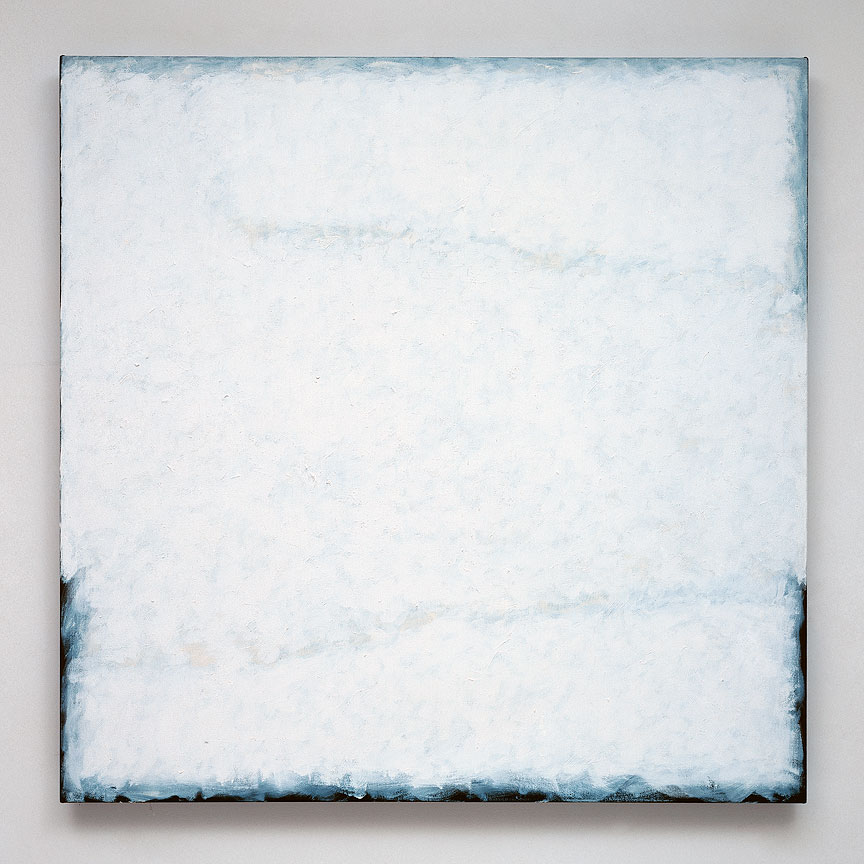 |
| 2004 Series #13 (White) |
 |
| 2004 Series #33 (White) |
Robert Ryman
Here�s a change � some old fashioned and very elegant portraiture from English painter Meredith Frampton (1894 � 1984). Frampton was born in London; the only son of the noted establishment sculptor Sir George Frampton and the artist Christabel Cockerell. Meredith studied at John�s Wood Art School and entered the Royal Academy Schools in 1913. His first exhibited at the Royal Academy in 1920, his work winning increasing critical recognition. The final years and aftermath of the Great War saw a return of realism and of styles dating back to before Post-Impressionism, in the so-called �Return to Order�. This became known as �Neo-Realism� or �Modern Realism� in England and it was led by Meredith Frampton, Charles Ginner, Harold Gilman and the Euston Road School.
Frampton produced highly finished portraits and still-lifes, sometimes with a slightly Surrealist flavour. He excelled at conveying the intellectual qualities of his sitters. Frampton�s portraiture harks back to the tradition of full-length portraits of women associated with the work of earlier artists, such as Van Dyck and Gainsborough.
On the death of his father in 1928, Meredith took over his studio at 90 Carlton Hill in St John�s Wood. Frampton became one of the most sought-after portraitists of the inter-war years, but was a painfully slow worker and unsurprisingly, his output was small, but significant. He painted a few female portraits that helped define the �Roaring Twenties�. His 1921 portrait of Winifred Radford was commissioned by her husband, Douglas Illingworth.
Frampton�s elegant full-length portrait Marguerite Kelsey is in the collection of the Tate Galleries.
His oil on canvas Portrait of a Young Woman was also presented to the Tate. Frampton later said that he painted that picture as �a relaxation from commissions, and to celebrate an assembly of objects� beautiful in their own right�. The sitter was Margaret Austin-Jones, then aged 23. Her dress was made up from a Vogue pattern by Frampton�s mother. The vase in the picture made of mahogany, was designed by Frampton himself.
Frampton was elected ARA in 1934 and RA in 1942. His Diploma Work was Still-life. Most years between 1926 and 1945 he exhibited a picture at the RA. His refined and highly finished portraits of attractive young women and men of science and of letters, carefully posed with appropriate accoutrements, were lauded for their psychological intensity and the artist�s personal sense of mystery. Frampton�s overriding concern for formal clarity was paramount, his exceptional �clarity of expression� considered �a vehicle for a celebratory delight in the material world.� Due to failing eyesight Frampton retired from the active exercise of his profession in 1953 and fell into obscurity, but his 1982 Tate retrospective somewhat revived his reputation. He wrote of his own work: �I think my principal aim has always been to paint the sort of picture that I would like to own and live with had it been painted by someone else.� Frampton died in 1984.
Frampton produced highly finished portraits and still-lifes, sometimes with a slightly Surrealist flavour. He excelled at conveying the intellectual qualities of his sitters. Frampton�s portraiture harks back to the tradition of full-length portraits of women associated with the work of earlier artists, such as Van Dyck and Gainsborough.
 |
| 1919 Sir George James Frampton |
 |
| 1921 Winifred Radford |
 |
| 1928 Margeurite Kelsey |
 |
| 1935 Portrait of a Young Woman |
 |
| 1927 Still Life |
 |
| 1929 King George VI |
 |
| 1931 Sir Henry John Newbolt |
 |
| 1932 Still Life |
 |
| 1937 A Game of Patience |
 |
| 1945 Dr. Clive Forster-Cooper |
 |
| Sir Frederick Gowland Hopkins |
Meredith Frampton - portraitist
Clyfford Still (1904 � 1980) was born in 1904 in Grandin, North Dakota. He became a leader in the first generation of Abstract Expressionists that emerged after World War II. Still's contemporaries included Franz Kline, Willem de Kooning, Robert Motherwell, Jackson Pollock, Mark Rothko, Barnett Newman and Philip Guston.
Still attended Spokane University, Washington for a year in 1926 and again from 1931 to 1933. After graduation, he taught at Washington State College in Pullman until 1941. He spent the summers of 1934 and 1935 at the Trask Foundation in Saratoga Springs, New York. From 1941 to 1943, he worked in defence factories in California. In 1943 he had his first one-man exhibition at the San Francisco Museum of Art, and he met Mark Rothko in Berkeley at this time. In the same year Still moved to Richmond, where he taught at the Richmond Professional Institute.
When Still was in New York in 1945, Rothko introduced him to Peggy Guggenheim, who gave him a one-man exhibition at her Art of This Century gallery in early 1946. Later that year, the artist returned to San Francisco, where he taught for the next four years at the California School of Fine Arts. Solo exhibitions of his work were held at the Betty Parsons Gallery, New York, in 1947, 1950, and 1951 and at the California Palace of the Legion of Honor, San Francisco, in 1947. In New York in 1948, Still worked with Rothko and others on developing the concept of the school that became known as the Subjects of the Artist. He resettled in San Francisco for two years before returning again to New York. A Still retrospective took place at the Albright-Knox Art Gallery, Buffalo, New York, in 1959. In 1961, he settled on his farm near Westminster, Maryland.
Solo exhibitions of Still�s paintings were presented by the Institute of Contemporary Art of the University of Pennsylvania in Philadelphia in 1963 and at the Marlborough-Gerson Gallery, New York in 1969�70. He received the Award of Merit for Painting in 1972 from the American Academy of Arts and Letters, of which he became a member in 1978, and the Skowhegan Medal for Painting in 1975. Also in 1975, a permanent installation of a group of his works opened at the San Francisco Museum of Modern Art. The Metropolitan Museum of Art, New York, gave him an exhibition in 1980. Still died that same year in Baltimore.
Still attended Spokane University, Washington for a year in 1926 and again from 1931 to 1933. After graduation, he taught at Washington State College in Pullman until 1941. He spent the summers of 1934 and 1935 at the Trask Foundation in Saratoga Springs, New York. From 1941 to 1943, he worked in defence factories in California. In 1943 he had his first one-man exhibition at the San Francisco Museum of Art, and he met Mark Rothko in Berkeley at this time. In the same year Still moved to Richmond, where he taught at the Richmond Professional Institute.
When Still was in New York in 1945, Rothko introduced him to Peggy Guggenheim, who gave him a one-man exhibition at her Art of This Century gallery in early 1946. Later that year, the artist returned to San Francisco, where he taught for the next four years at the California School of Fine Arts. Solo exhibitions of his work were held at the Betty Parsons Gallery, New York, in 1947, 1950, and 1951 and at the California Palace of the Legion of Honor, San Francisco, in 1947. In New York in 1948, Still worked with Rothko and others on developing the concept of the school that became known as the Subjects of the Artist. He resettled in San Francisco for two years before returning again to New York. A Still retrospective took place at the Albright-Knox Art Gallery, Buffalo, New York, in 1959. In 1961, he settled on his farm near Westminster, Maryland.
Solo exhibitions of Still�s paintings were presented by the Institute of Contemporary Art of the University of Pennsylvania in Philadelphia in 1963 and at the Marlborough-Gerson Gallery, New York in 1969�70. He received the Award of Merit for Painting in 1972 from the American Academy of Arts and Letters, of which he became a member in 1978, and the Skowhegan Medal for Painting in 1975. Also in 1975, a permanent installation of a group of his works opened at the San Francisco Museum of Modern Art. The Metropolitan Museum of Art, New York, gave him an exhibition in 1980. Still died that same year in Baltimore.
 |
| 1945 |
 |
| 1945 |
 |
| 1946 |
 |
| 1947 |
 |
| 1947 |
 |
| 1947 |
 |
| 1948 |
 |
| 1949 |
 |
| 1950 |
 |
| 1950 |
 |
| 1951 |
 |
| 1953 |
 |
| 1953 |
 |
| 1954 |
 |
| 1955 |
 |
| 1957 |
 |
| 1957 |
 |
| 1957 |
Clyfford Still
Roy Lichtenstein (1923 � 1997) was a prominent American Pop Artist. During the 1960s his paintings were exhibited at the Leo Castelli Gallery in New York, and along with Andy Warhol, Jasper Johns, James Rosenquist and others he became a leading figure in the Pop Art movement.
Lichtenstein received a M.F.A. degree from Ohio State University in 1949 and in 1951 he had his first one-man exhibition at the Carlebach Gallery in New York. In 1961 Lichtenstein began his first Pop paintings using cartoon images and techniques derived from the appearance of commercial printing.
His first work to feature the large-scale use of hard-edged figures and Ben-Day dots was 'Look Mickey' 1961. In the same year he produced six other works with recognizable characters from gum wrappers and cartoons.
Lichtenstein had his first one-man show at the Castelli gallery in 1962 and the entire collection was bought by influential collectors before the show even opened.
Lichtenstein would say of his own work: Abstract Expressionists "put things down on the canvas and responded to what they had done, to the colour positions and sizes. My style looks completely different, but the nature of putting down lines pretty much is the same; mine just don't come out looking calligraphic, like Pollock's or Kline's."
When his work was first released, many art critics of the time challenged its originality. More often than not they were making no attempt to be positive. Lichtenstein responded to such claims by offering responses such as the following: "The closer my work is to the original, the more threatening and critical the content. However, my work is entirely transformed in that my purpose and perception are entirely different. I think my paintings are critically transformed, but it would be difficult to prove it by any rational line of argument".
His most famous image is arguably 'Whaam!' 1963, one of the earliest known examples of Pop Art, adapted a comic-book panel from a 1962 issue of DC Comics� All-American Men of War.
Most of his best-known artworks are relatively close, but not exact, copies of comic book panels - a subject he largely abandoned in 1965.
In the 1970s and 1980s, his style began to loosen and he expanded on what he had done before. He produced a series of �Artists Studios� which incorporated elements of his previous work. A notable example being 'Artist's Studio, Look Mickey' 1973, which incorporates five other previous works, fitted into the scene.
Lichtenstein received a M.F.A. degree from Ohio State University in 1949 and in 1951 he had his first one-man exhibition at the Carlebach Gallery in New York. In 1961 Lichtenstein began his first Pop paintings using cartoon images and techniques derived from the appearance of commercial printing.
His first work to feature the large-scale use of hard-edged figures and Ben-Day dots was 'Look Mickey' 1961. In the same year he produced six other works with recognizable characters from gum wrappers and cartoons.
 |
| 1961 Look Mickey |
Lichtenstein had his first one-man show at the Castelli gallery in 1962 and the entire collection was bought by influential collectors before the show even opened.
Lichtenstein would say of his own work: Abstract Expressionists "put things down on the canvas and responded to what they had done, to the colour positions and sizes. My style looks completely different, but the nature of putting down lines pretty much is the same; mine just don't come out looking calligraphic, like Pollock's or Kline's."
When his work was first released, many art critics of the time challenged its originality. More often than not they were making no attempt to be positive. Lichtenstein responded to such claims by offering responses such as the following: "The closer my work is to the original, the more threatening and critical the content. However, my work is entirely transformed in that my purpose and perception are entirely different. I think my paintings are critically transformed, but it would be difficult to prove it by any rational line of argument".
 |
| 1963 Whaam! |
Most of his best-known artworks are relatively close, but not exact, copies of comic book panels - a subject he largely abandoned in 1965.
In the 1970s and 1980s, his style began to loosen and he expanded on what he had done before. He produced a series of �Artists Studios� which incorporated elements of his previous work. A notable example being 'Artist's Studio, Look Mickey' 1973, which incorporates five other previous works, fitted into the scene.
 |
| 1973 Artists Studio Look Mickey |
In the late 1970s, this style was replaced with more surreal works such as 'Pow Wow' 1979.
 | ||||||
| 1979 Pow Wow |
 |
| 1962 Blam |
 |
| 1962 Takka Takka |
 |
| 1963 Image Duplicator |
 |
| 1963 In the Car |
 |
| 1964 Temple of Apollo |
 |
| 1966 Brushstroke with Spatter |
 |
| 1968 Preparedness |
 |
| 1972 Bananas & Grapefruit |
 |
| 1972 Still Life with Goldfish Bowl and Painting of a Golf Ball |
 |
| 1973 Still Life with Crystal Bowl |
 |
| 1974 Cubist Still Life with Playing Cards |
 |
| 1979 Go for Baroque |
 |
| 1980 Jar and Apples |
 |
| 1983 Painting near Window |
 |
| 1997 Brushstroke Still Life with Lamp |
Roy Lichtenstein
Langganan:
Postingan
(
Atom
)


